

I'm Scared of Needles But Want Filler What Are My Options?

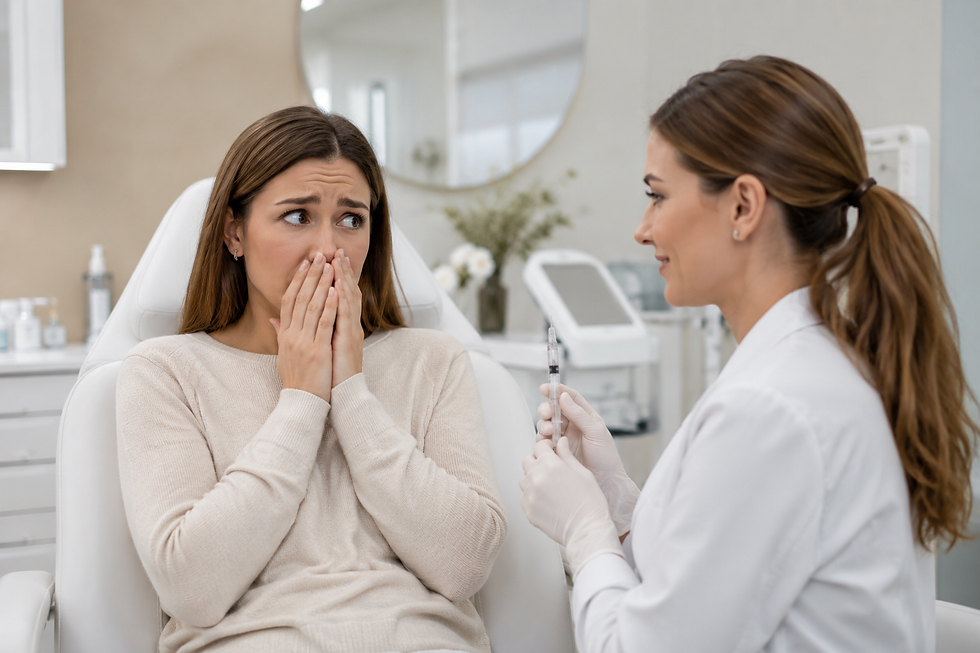
Here's a situation we hear a lot. Someone wants lip fillers, cheek fillers, or radiance to help with their smile lines, but after they picture the actual scenario, they convince themselves not to go through with it. Three months later, they're still contemplating it and are still not going through with it.
If that's you, you're definitely not alone. Needle fear is one of the main reasons people avoid cosmetic treatments they want. It's not a lack of willpower and you're not being overly dramatic. There are real ways to make a filler appointment more comfortable, and depending on your actual goals with the fillers, there might be ways to make the appointment even more comfortable that don't use fillers at all.
First, You're Not Overreacting
Fear of needles has an actual name trypanophobia and it's a recognized phobia, not a personality quirk. Plenty of people who are otherwise totally unbothered by pain or medical stuff still get a racing heart the moment a syringe comes into view. According to research from the Canadian Institutes of Health Research, needle fear often starts in childhood and, left unaddressed, can actually get worse into adulthood rather than fade on its own.
Which means: this isn't something you're supposed to just white-knuckle through. There are legitimate techniques that reduce both the anxiety and the physical discomfort, and any injector worth booking with should already be using at least some of them.
Why Filler Feels Worse Than It Actually Is
A few things stack the deck against you here:
It's happening on your face, which just feels more personal and exposed than getting a flu shot in your arm
You can often see it coming, whether directly or in a mirror
There isn't one injection, there are usually several across the session
You've had time to sit with the anticipation, and anticipation is where most of the fear actually lives
None of that means the treatment itself is worse than a routine needle. It usually just feels that way because of the setting.
What You Can Actually Do About It
Ask about cannula technique.
For a lot of areas cheeks, under-eyes, larger volume zones an experienced injector can use a blunt-tipped cannula instead of a sharp needle for most of the work. One small entry point gets made with a fine needle, then the cannula does the rest gliding beneath the skin. Less repeated puncturing, often less bruising too, and a lot of patients find it noticeably easier to sit through.
Get numbed properly first.
A topical numbing cream given 20 to 30 minutes before treatment makes a real difference. Most modern fillers also have lidocaine mixed right into it, so by the time the appointment's actually underway, a lot of people are surprised by how little they feel.
Use ice or a vibration tool.
Cold dulls the surface nerves. Vibration devices (sometimes called "buzzy" tools) work by essentially crowding out the pain signal with a different sensation; it's a legitimate pain-science technique, not a gimmick. Ask if your clinic has one.
Bring someone, or just breathe through it.
Something as simple as box breathing four counts in, hold four, four counts out, hold four can genuinely calm your nervous system in the chair. A friend in the room, or even music through your headphones, helps more than people expect.
Start small.
You don't need to commit to a full treatment plan on day one. Plenty of patients start with one area, see how it goes, and decide from there whether to do more. Nobody should be pressuring you to do otherwise.
Ask your injector to narrate.
Providers who tell you what's about to happen before it happens tend to cut anxiety way down, because a lot of the fear is really about not knowing what's coming next, not the needle itself.
If You'd Rather Skip Needles Entirely
Filler restores lost volume, and honestly, nothing fully replicates that without some kind of needle involved. But depending on what you're actually trying to fix, there are options that get you closer with far less needle exposure, or none at all.
RF microneedling uses very fine, shallow needles paired with radiofrequency energy to get your own collagen working. It's a completely different feeling than a filler needle, and most needle-anxious patients tolerate it fine. Laser resurfacing can improve texture, fine lines, and even some of the hollowing that comes from sun damage, with zero needles involved. And if your concern is more about overall skin quality than actual volume loss, something like what we covered in Hydrafacial vs. Chemical Peel might get you a good chunk of the way there.
If real volume loss is the issue though, filler is still going to be the most direct answer. But at least now you're choosing that with the full picture, not avoiding it out of fear with no other information.
How We Handle This at Rocaderm
Needle anxiety comes up in consultations more than you'd think, and we don't brush past it. Every filler consultation starts with a real conversation about your comfort, not just what you want your face to look like.
Depending on the area and what you're comfortable with, we might use cannula technique, proper numbing, ice, distraction tools sometimes a combination. We walk through each step before doing it, not after. If you want to pause halfway through, or stop entirely, that's your call, full stop.
And if you're just not ready to commit on your first visit, that's fine too. A consultation doesn't obligate you to anything that day.
A Few Common Questions
Does filler hurt more than Botox?
Generally yes, a little there's more product going in per point but with proper numbing most people describe it as brief pressure more than pain.
Can I just ask for numbing cream if it's not offered upfront?
Always. Any clinic worth going to will say yes without hesitation.
Does every area work with cannula technique?
Not quite every area lips especially still often need a fine needle for precision but cheeks, jawline, and under-eyes are usually well suited to it.
Will being anxious make the treatment less safe?
No, but tell your injector beforehand so they can adjust pacing and technique for you.
What if I get in the chair and panic anyway?
You can stop at any point, no explanation needed. That should never be a fight with your provider.
Bottom Line
Being scared of needles doesn't actually rule out filler; it just means you need someone who takes that seriously instead of rushing past it. Between numbing, cannula options, distraction techniques, and simply starting small, most people find the real experience is a lot less scary than the version they built up in their head.
The best move is an honest conversation with an injector who'll listen first and build the plan around your comfort, not just the outcome. That's what our FAQ page and consultation process are there for.


Comments